


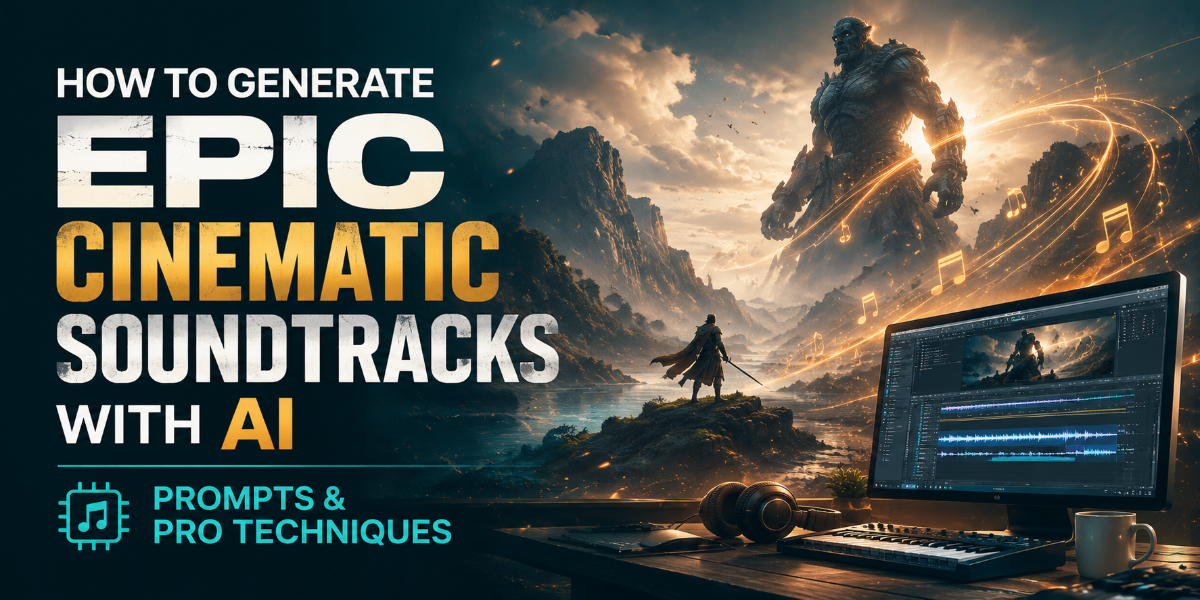
Whether you are an indie game developer looking for a boss-fight anthem, a YouTuber needing a dramatic intro, or a filmmaker scoring a short, cinematic music is the heartbeat of your project.
However, generating high-quality film scores using AI isn't as simple as typing "make sad movie music." To get that massive, Hans Zimmer-style orchestral sound, you need to speak the language of a composer and an audio engineer.
In this guide, we will give you a cheat sheet of proven cinematic prompts, and then break down the exact anatomy of a professional prompt so you can master AI music generation.
Part 1: The Ultimate Cinematic Prompt Library
Stop guessing and start producing. Copy and paste these prompt templates into your AI generator (like Meloty.ai or Suno) and tweak the bolded words to fit your scene.
1. The "Epic Fantasy Battle" Prompt
Prompt: Epic Orchestral, Cinematic Trailer Music. A powerful main theme for a massive medieval battle. Full symphony orchestra featuring high-octane staccato strings, aggressive brass section, and heavy tribal percussion. Tempo: 140 BPM. Climax features a massive orchestral tutti with soaring choral chanting. Wide stereo image, dramatic, triumphant, high fidelity.
2. The "Sci-Fi Cyberpunk Tension" Prompt
Prompt: Dark Sci-Fi Soundtrack, Cyberpunk Cinematic Score. Tense atmosphere for a futuristic chase scene. Instrumentation: Pulsing analog synthesizers, deep sub-bass booms, distorted electronic drums mixed with sparse orchestral strings. Tempo: 110 BPM. Build-up features rising synth arpeggios. Moody, suspenseful, gritty, punchy low-end.
3. The "Emotional Tragic Farewell" Prompt
Prompt: Emotional Cinematic Score, Modern Classical. A heartbreaking theme for a hero's sacrifice. Instrumentation: Solo mournful cello, soft felt piano, ethereal ambient pads, and slow legato string section. Tempo: 60 BPM. Minimalist arrangement focusing on silence and emotion. Dramatic decrescendo outro. Melancholic, tear-jerking, cinematic, intimate.
4. The "Eerie Horror Suspense" Prompt
Prompt: Psychological Horror Score, Cinematic Ambient. Terrifying background music for a haunted house exploration. Instrumentation: Atonal string screeches, detuned music box, low rumbling drones, and sudden loud percussive impacts (jump scares). Unpredictable tempo. Dissonant, creepy, unsettling, atmospheric.
Part 2: How to Engineer the Perfect Cinematic Prompt
Why do the prompts above work so well? Professional AI prompting is about layering information. Let’s take a master-level prompt and break it down sentence by sentence so you can learn how to write your own.
The Master Prompt:
Epic Orchestral, Cinematic Trailer Music. A powerful main theme for a fantasy adventure film depicting a hero's awakening and journey to save the world. Full symphony orchestra featuring high-octane strings, heroic brass section, woodwinds, and heavy percussion. Tempo: 140 BPM. Intro: Deep low strings and atmospheric synth drones create a mysterious atmosphere. Build-up: Driving snare drum rolls. Climax: Massive orchestral tutti with soaring female choir and cinematic sub-bass booms. Outro: Dramatic decrescendo. Wide stereo image, dynamic range compression, punchy low-end. Triumphant, Heroic, Grand, Cinematic.
1. The Style Anchor (Genre & Vibe)
-
Text: Epic Orchestral, Cinematic Trailer Music.
-
Why it works: Always put your core genre at the very beginning. AI models prioritize the first few words. Using "Cinematic Trailer Music" instead of just "Film Score" forces the AI to create something with immediate impact, short structures, and massive dynamic shifts.
2. The Narrative Context
-
Text: A powerful main theme for a fantasy adventure film depicting a hero's awakening...
-
Why it works: The AI doesn't "watch" movies, but its training data associates words like "Hero's awakening" with specific musical scales and triumphant chord progressions. Using strong adjectives (Powerful) and noun phrases gives the AI an emotional target.
3. Instrumentation & Tempo
-
Text: Full symphony orchestra featuring high-octane strings, heroic brass section... Tempo: 140 BPM.
-
Why it works: Don't just list instruments; describe how they are played. "High-octane strings" triggers fast, aggressive bowing patterns. "Heroic brass" pushes the AI toward major keys. Setting a specific BPM (Beats Per Minute) locks in the energy level.
4. Structural Progression
-
Text: Intro: Deep low strings... Build-up: Snare drum rolls... Climax: Massive orchestral tutti...
-
Why it works: AI music can easily sound like a flat, boring loop. By explicitly dictating the timeline (Intro, Build-up, Climax, Outro), you force the AI to create a musical journey. Words like "Tutti" (all instruments playing together) and "Build-up" trigger automatic volume swells and dramatic tension.
5. Audio Engineering Specs
-
Text: Wide stereo image, dynamic range compression, punchy low-end.
-
Why it works: These are professional mixing terms. Adding them acts as a cheat code, instructing the AI's final rendering process to sound like a finished, theatrical master rather than a raw, muddy demo.
6. The Keyword Safety Net
-
Text: Triumphant, Heroic, Grand, Cinematic.
-
Why it works: Placing a string of descriptive adjectives at the very end acts as a checklist for the AI model. If the AI misunderstood the complex sentences above, these raw tags will pull the generation back on track.
Elevate Your Scores with Meloty.ai
Writing prompts is an art, but what if you didn't have to write them at all?
If you are serious about cinematic music, you need a platform that understands audio workflows. Instead of manually typing out "punchy low-end" or "orchestral tutti," creators are using Meloty.ai.
Meloty integrates world-class LLM Agents (like ChatGPT 5.5 and Claude 4.6). You simply chat with the Agent: "I need a heroic battle theme for my game. Make it sound like Hans Zimmer." The Agent automatically writes the hyper-detailed technical prompt for you.
Furthermore, Meloty provides 12-track stem and MIDI downloads. You can generate an epic orchestral track, download the isolated choir, strings, and brass MIDI files, and mix them perfectly in your own video editor or DAW. Start producing cinematic masterpieces on [Meloty.ai] today.